

How To Get An Accurate Quote From a Contractor

A contractor just emailed her the quote she’s been waiting on for three weeks. Her entire renovation was constructed around this quote. It’s way higher than what she expected, and completely outside of her budget constraints. There’s no scope of work for what all that money’s going towards, so she’s completely in the dark. She starts feeling overwhelmed, trapped in an inescapable hole. As if she’s failed before she began. She looks up on Google if she got a fair price. Nothing. No help.
What do I do to get a good renovation quote?
This is something most homeowners never realize: the true cost of your renovation is not determined by a contractor, it’s determined by you, long before you ever pick up your phone to call the contractor. The number you get quoted is a reflection of how much detail you go into when telling the contractor what you want. And honestly, most homeowners don’t think in that much detail; but interior designers do.
An interior designer will think in detail for you and complete a scope of work to send to the contractor to get a more accurate estimate on what they will charge for your renovation.
What should I think about first when considering a home design project?
When cost is your biggest worry, it becomes the loudest question in your mind. In order to make the best decisions about your home, it’s important to remember other factors that will determine the outcome of your project. Otherwise you may end up with a house you’re not entirely satisfied with.
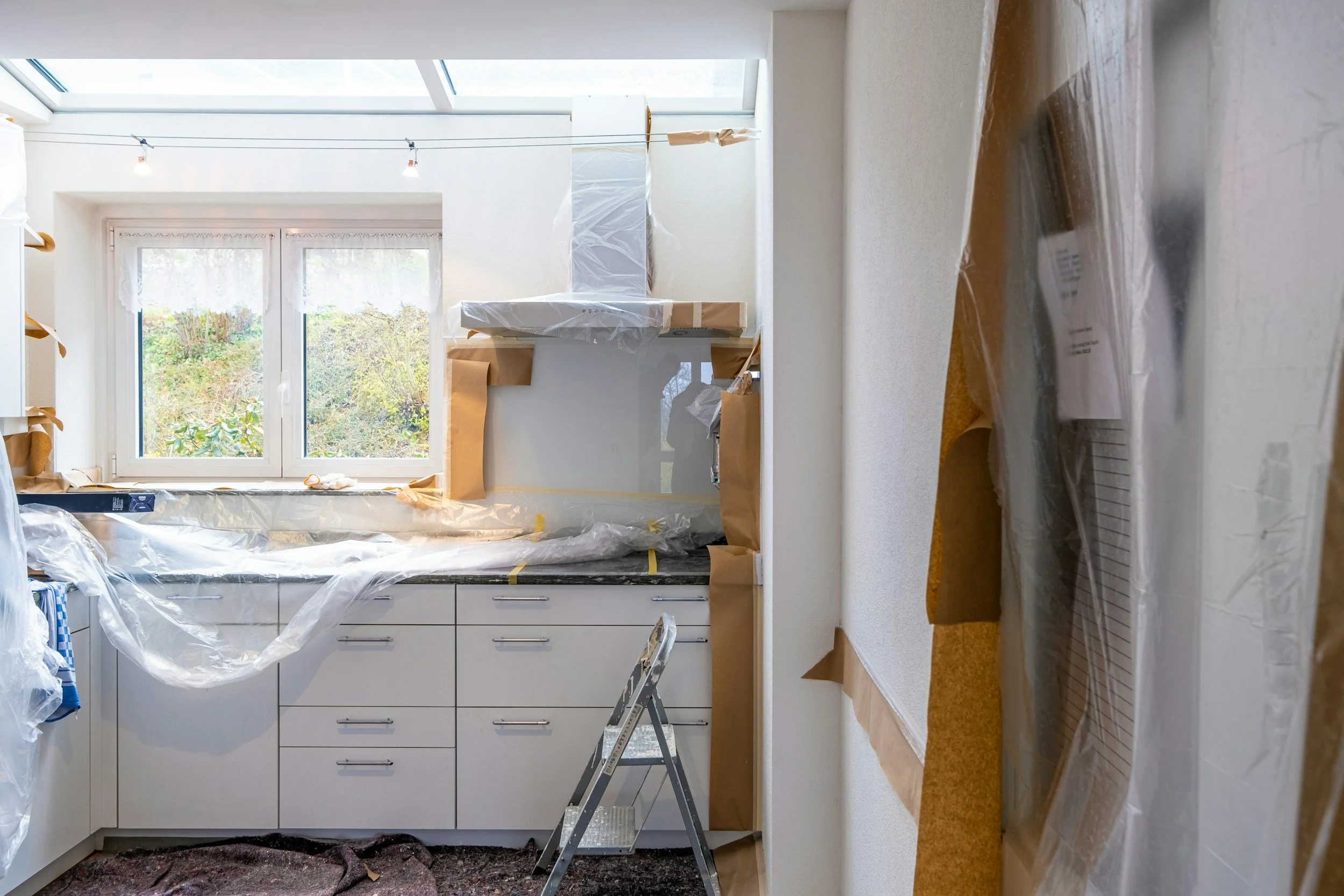
What actually determines renovation cost?
Scope: A detailed, itemized list of what your money is being spent on.
Scope is the itemized list of everything your project includes - and the absence of it is the single most common reason homeowners receive quotes that don't match their expectations. Having a robust scope will prevent expensive mistakes down the road: change orders, scales being incorrect, low quality materials, anything that you would need to have redone. The scope will also bring more focus and less overwhelm to your project by neatly organizing things.
Finish tier: Price range and quality of materials
Finish tier is determined by the price and quality of different materials. A homeowner might choose the “basic” finish tier, which will include cheaper and lower quality items materials, such as laminate floors and counters. Or they might choose the “luxury” finish tier, which would include higher quality, more expensive materials such as marble counters and terrazzo floors
Hidden Systems: What you don’t see (HVAC, electrical, heating, air conditioning, plumbing, etc
The decisions that are the hardest to undo – and the most expensive to change mid-project – are rarely visible at the beginning. That is what hidden systems mean in practice. Your electrical systems, your plumbing, your walls, and your HVAC all fall under this category. Not having a designer to include any changes to the hidden systems in the scope of work will eventually lead to expensive modifications in the future.
Contingency: Why having a real budget plans for the unknown instead of pretending it away
A contingency is a portion of your budget set aside for the work no one could see coming – and in a renovation, something always comes up. It’s important to set aside contingency money so that if an emergency expense occurs, you aren’t stuck with an unfinished house until you get the money to pay for it. The industry standard in 10-20% of the total budget for the project.
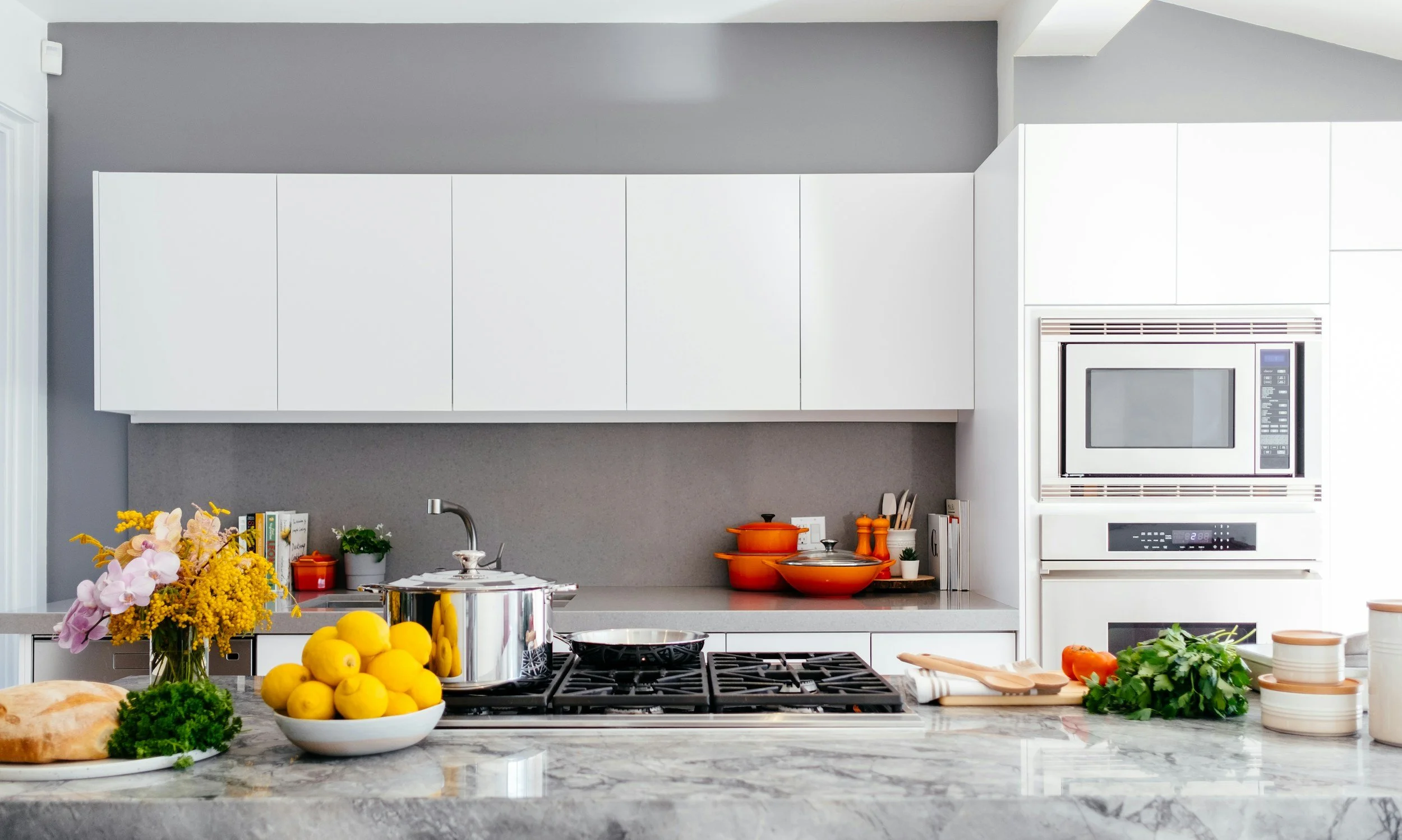
Whats the starting point for a renovation?
The starting point for any renovation is not a number. It is clarity — on scope, finish tier, hidden systems, and contingency. Those four inputs are what determine what a contractor will charge you. Without them, any number you receive is a guess dressed up as a quote. Most homeowners arrive at the contractor conversation hoping for certainty before they have done the work that produces it. That is not a failure of imagination. It is simply what happens when the process starts in the wrong place. An interior designer's first job is to build that clarity before a single contractor walks through your door. That means defining exactly what is changing, understanding what finish levels actually cost at different tiers, surfacing the systems behind the walls, and building a budget that accounts for what you do not know yet. Once those four things are in place, the number you receive will finally mean something. The next time you get that email, you will understand how to read it
What are the next steps?
If after reading this you have had more questions than have been answered, that’s intentional. The complete structure: numbers, the process, the decisions a majority of homeowners skip – is what I am covering in my free webinar, The Real Cost of Your Project, on July 2. If you are thinking about beginning a renovation in Buffalo or any of the surrounding areas, this is the one hour that will make every conversation after it easier, Register at the link below.

FAQ:
Q: “how much does a renovation cost in buffalo?”
A: In buffalo and the surrounding suburbs (Clarence, East Amherst, Orchard Park, and Williamville) renovation costs vary drastically depending on scope and finish tier. A focused single-room renovation typically starts between $30,000 and $50,000. A full home renovation in a larger property on the other hand can reach $200,000 or more.
Q: “Should I call a contractor or a designer first?”
A: You should call a designer first. A designer will consult with you and create a detailed scope of work to help you get a better quote from a contractor. Calling a contractor first may result in not having your vision fully fleshed out or unnecessary expenses
Q: “What should I know before budgeting a renovation?”
A: You need to know exactly what you want from your renovation, what kind of finish tier you want, any hidden system changes, and have a contingency. If you budget without knowing all of this, then you may run into obstacles in the middle of your renovation. The most important thing to do first is to know exactly what you want and how you want it to look.